
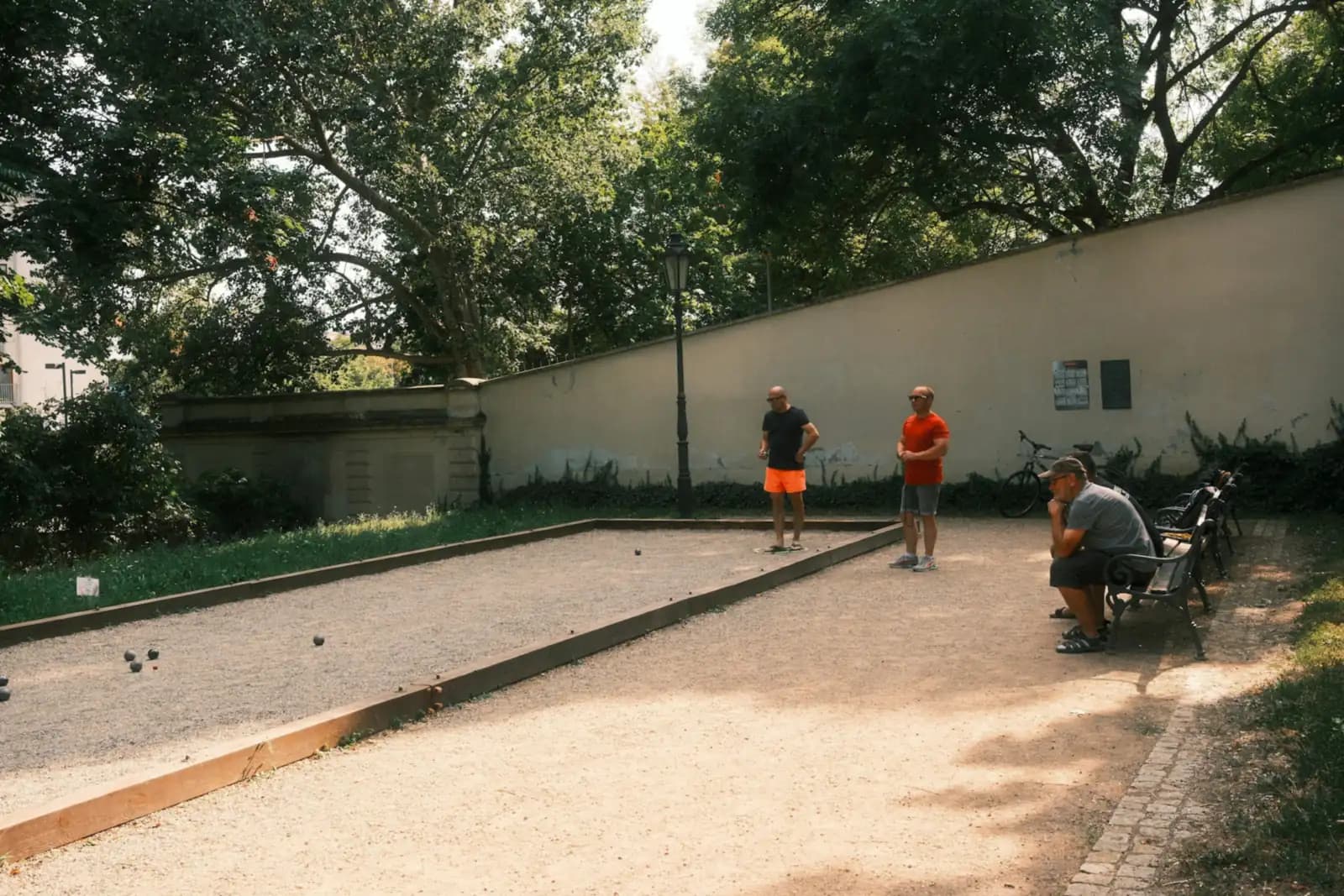
How to organize a petanque tournament
A practical, step-by-step guide — from picking a format to publishing the results. Everything here runs on PlusPetanque, free during the open beta.
The seven steps
Fix the basics
Choose the date, the venue and the team format — tête-à-tête, doublette or triplette — and set a realistic capacity. The number of available lanes, not your ambition, dictates the maximum field.
Choose a competition format
Swiss for big fields where everyone plays all day, poules with a knockout for the classic feel, barrage for FIPJP-style qualification, pure knockout when time is short. The format guide compares them all. Compare the formats
Do the lane and timing math
Each match needs a lane (regulation 15 × 4 m; smaller works for club play) and a round lasts 30–50 minutes. Lanes needed = teams ÷ 2. The table below shows realistic day plans.
Open online registration
Set the entry fee, the registration deadline and whether the team list is public. Online registration fills faster, spares you the spreadsheet, and teams get their confirmation automatically.
Promote the tournament
Publish early — the tournament page, the calendar and the map do the searching-visibility work; share the link in club groups and on social media, where a share card is generated for you automatically.
Run the day
Check teams in, generate the draw with one click, let teams or referees enter scores from their phones, and handle disputes with the built-in referee call. Standings update live for everyone.
Publish the results
End the tournament to generate the final standings. The public page turns into a permanent results archive — next year's participants (and search engines) will find it.
How long will it take? How many lanes?
| Teams | Lanes needed | Rounds (Swiss) | Duration (hours) |
|---|---|---|---|
| 16 | 8 | 5 | 4–5 |
| 32 | 16 | 5–6 | 5–6 |
| 64 | 32 | 6–7 | 7–8 |
Assumes a Swiss format with 40-minute rounds plus breaks; knockout finals add 1–2 hours. Halve the lanes and roughly double the duration if rounds are played in two waves.
Day-before checklist
- Lanes marked and numbered, boundaries agreed
- Draw ready to generate; scoreboard or TV display set up
- Jacks, measuring tapes and spare boules at the desk
- Registration desk plan: check-in list, entry fee handling
- Referee confirmed and briefed (cards, time limits)
- Prizes, podium and photo spot prepared
- Rain plan and a channel to communicate delays
- Phones charged — scores are entered courtside
Organizer FAQ
- How many lanes do I need for a petanque tournament?
- One lane per match: teams ÷ 2 when every team plays at once. 32 teams need 16 lanes — or 8 lanes with rounds played in two waves, which roughly doubles the duration.
- How long does a petanque tournament take?
- Count 30–50 minutes per round. A 5-round Swiss for 16–32 teams takes about 5 hours including breaks; knockout finals add another 1–2 hours.
- What entry fee should I charge?
- Club tournaments typically charge €5–15 per player, covering prizes and venue costs. Publish the fee and what it covers on the tournament page — transparency fills fields faster.
- How many rounds should a Swiss tournament have?
- 5 rounds rank 16–32 teams reliably; use 6–7 rounds up to 64 teams. More rounds than that rarely change the podium.
Ready to organize?
Create the tournament, open registration and let PlusPetanque run the draws, scoring and results — free during the open beta.